
Best Fish in Drawquarium: Picks by Goal
The best fish in Drawquarium depends on what you need: a first pet, a cleaner, a breeding pair, or a wallpaper centerpiece. Here are the picks.
There is no single best fish in Drawquarium because the game does not use stats. A fish is a drawing, a set of behaviors, and a maintenance cost. The right pick depends on the job you want it to do. This page gives one recommendation per goal, with the reasoning and the trade-off, so you can choose in a minute instead of scrolling a template grid for an hour.
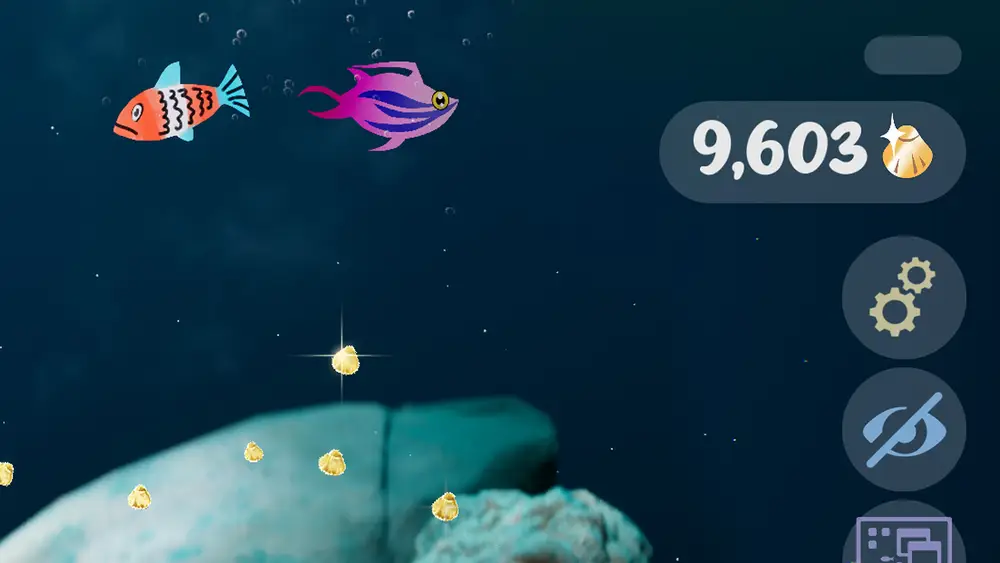
For the ranking by role rather than raw stats, see the Drawquarium tier list→.
Quick picks
| Goal | Pick | Why |
|---|---|---|
| First fish | Standard fish | Easiest to draw, animate, and read; breeds later |
| Cleaner | Bottom feeder | Confirmed to eat leftover food on the substrate |
| Wallpaper centerpiece | Jellyfish or sailfish | Strong silhouette and slow, readable motion |
| Breeding pair | Two standard fish | Simple bodies and stable behavior |
| Populated tank | Small schooling fish | Cheap to draw, fills space, low visual weight |
| Show tank | Shark | Dominates the frame in an open-water layout |
| Prestige | Golden fish | Earned through long-term care, not purchased |
Best first fish: the standard fish
Start with the default body. It is the shape the editor is built around, it animates without surprises, and it is the easiest template to learn brush, fill, and symmetry on. A round body with one clear tail and two big eyes will look good in the tank even if the color is flat.
The trade-off is personality. A standard fish looks like a fish. If you want a mascot, add one weird feature: a single eyebrow, a tiny hat, a mismatched fin. That detail is what people remember.
Best cleaner: the bottom feeder
The demo page confirms bottom-feeding fish that only eat leftover food. That is the only support behavior the developer has described, and it directly reduces the least fun part of the game: vacuuming.
Draw a wide, flat body with a mouth on the underside. Keep the color muted so it does not compete with your display fish. One bottom feeder per four or five mid-water fish is a sensible ratio.
The trade-off is visibility. A bottom feeder spends its time near the substrate, behind plants. That is fine; it is a worker, not a star.
Best wallpaper fish: jellyfish or sailfish
Wallpaper mode rewards silhouette and slow motion. A jellyfish drifts, pulses, and reads as a single shape even when the tank is scaled to a 27-inch monitor. A sailfish cuts across the frame with a long bill and a tall fin, which gives the wallpaper a sense of speed.
Pick the jellyfish for a calm, dark, glowing tank. Pick the sailfish for a bright, open tank with a strong horizontal composition. Both are poor choices for a crowded tank, where their shapes get lost in decor.
Best breeding pair: two standard fish
Breeding is about condition and relationships, not species. Two standard fish are the safest pair because their bodies are simple, their animations are predictable, and the babies will look like fish rather than abstract shapes.
Raise them in the same tank for a few days before you expect anything. Keep the tank clean and the meals small. If the relationship view shows friction, swap one fish out instead of forcing it.
Best school: small fish in one color family
A school of five small fish makes a tank feel alive without adding five large hunger rings. Draw one body, duplicate it, and vary the color by a shade or two. Keep the school in one color family so it reads as a group rather than confetti.
The trade-off is maintenance. Five small fish still need feeding and relationships. If you want a low-maintenance tank, keep the school at three.
Best show fish: the shark
A shark is the fastest way to make a tank look expensive. It has a strong silhouette, a slow patrol, and a size that anchors the composition. It also needs open water and a large tank, and it will eat more than a small fish.
Build the tank around the shark: open center lane, rocks on the edges, plants behind the rock line. Do not drop a shark into a planted cube and expect it to look good.
The honest answer about golden fish
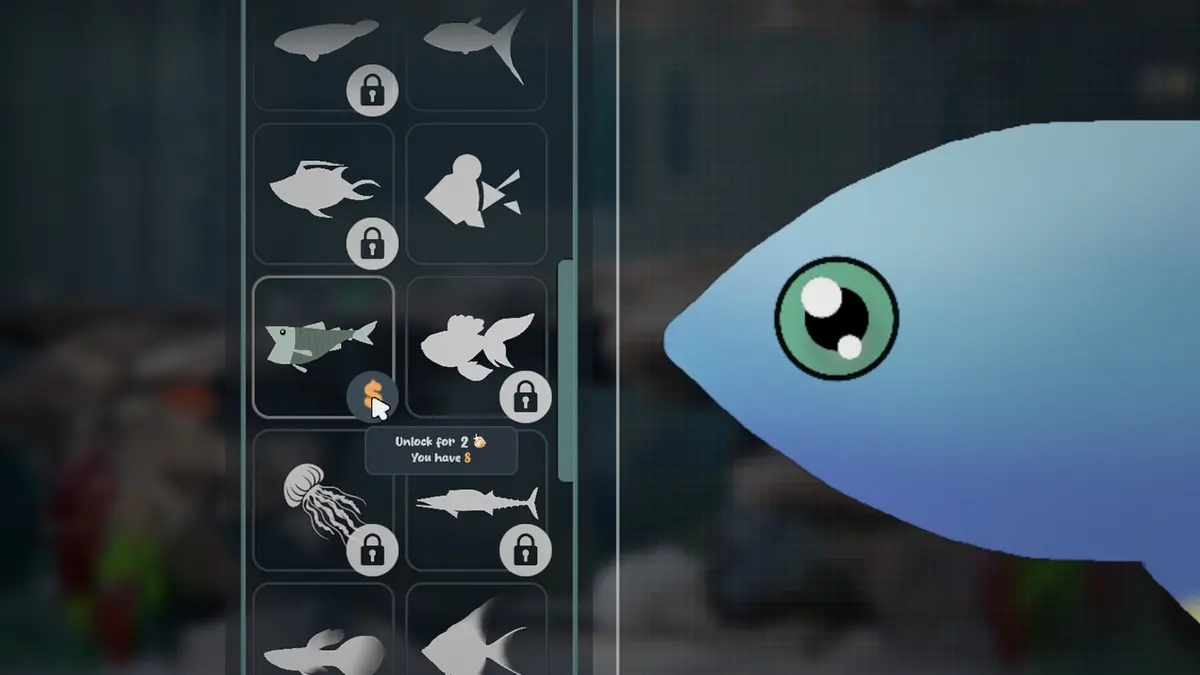
Golden fish are not a purchase. The demo page says well-kept fish can become golden, and the October posts treat that as a mark of care. If you want one, pick a fish you like, keep it healthy for a long time, and let the game decide. That is a different kind of "best": the fish you kept.
If you cannot decide, draw three fish in the same session and keep the one that looks best in wallpaper mode. The tank camera is the real judge, not the editor canvas.
Official source: Drawquarium on Steam ↗ and the demo page ↗, rokaplay ↗ and the Drawquarium Discord ↗
What "best" should not mean
Do not pick a fish because a guide claims it has the highest value, the fastest growth, or a secret drop. None of those numbers are published. A fish's value in this game comes from how it looks in your tank and how much you enjoy keeping it.
Do not pick a fish because it is hard to draw. Difficulty is not prestige here. A clean circle with two eyes can be the best fish in the tank if it makes you smile every time you see your desktop.
FAQ
What is the strongest fish in Drawquarium?
There is no strength stat and no combat. The closest thing to power is the shark's visual dominance, which is a composition choice rather than a gameplay advantage.
Which fish grows the fastest?
Growth rate is not published. Feeding and care are the confirmed inputs, and level 25 is a goal milestone rather than a species trait.
Can I keep a shark with small fish?
The game does not publish a predation system. The practical issue is space and composition: a shark in a small tank crowds the frame and clips through decor.
Are golden fish a separate template?
No. They are a care outcome described on the demo page: a well-kept fish can develop a golden form.
More Drawquarium Guides
A Drawquarium fish list built from official screenshots and patch notes: body templates, bottom feeders, jellyfish, sharks, and golden fish.
Use Drawquarium as a focus companion: the clock, timer, journal, checklist, and wallpaper mode, plus a simple work session setup.
How the Drawquarium food editor works, which shapes to draw, how portion size affects leftovers, and why bottom feeders still need the vacuum.
A practical Drawquarium guide for the first hour: draw a fish that reads well, feed it, finish early goals, and unlock your first upgrades.
Where Drawquarium runs: Windows PC requirements, Mac and Linux answers, Steam Deck compatibility, mobile, and console availability.
Drawquarium's price has not been announced. What is confirmed, how regional pricing works, whether it is free, and how to avoid overpaying.
Drawquarium launches on November 13, 2026 for Windows on Steam. What is confirmed about the release, the trailer, wishlists, and launch day.
How the Drawquarium template grid works: fish, eyes, fins, and food categories, Golden Scale unlocks, custom templates, and saved palettes.